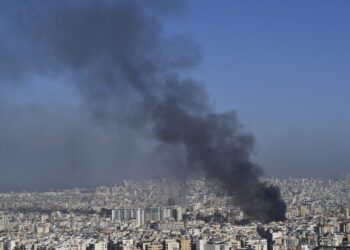


Might Be Humble On Sunday, as rockets and missiles streaked across the Lebanese and Israeli skies, the moment that residents of the region had been waiting for appeared to have arrived: an all-out war.
But Israel and the Lebanese militia Hezbollah quickly finished their exchange, declaring victory and indicating that the fighting was over, at least for the time being.
That equivocal outcome, nonetheless, uncovered something: Neither Hezbollah nor its provincial supporter, Iran, has tracked down a superior method for answering humiliating Israeli strikes in a manner that could both caution Israel off another assault, yet not incite a much greater conflict that could be destroying for them.
It is still unknown what Iran will do, if it does, and Tehran may still choose a course of action that regional observers have not anticipated. However, some experts in the region now believe that Hezbollah’s decision to limit its attack may reflect Iranian plans as it considers how to settle its own score with Israel. According to Iran analyst and editor of an independent regional website, Amwaj.media, Mohammed Ali Shabani, “The Iranians keep dropping hints about striking a target with precision.”
“Precision and proportion are now essential to our approach to this.” The region was once more in a very precarious position just a few weeks ago, months after Israel launched its deadly Gaza war in response to the Hamas-led attacks on Oct. 7.
When Israel blamed Hezbollah for a rocket that struck a soccer field and killed children in the Israeli-controlled Golan Heights last month, the latest round of Middle Eastern brinkmanship began. Hezbollah denied any involvement.
The subsequent retaliatory escalation by Israel quickly heightened tension throughout the region. On July 30, Israel struck Lebanon’s capital, Beirut, to kill one of Hezbollah’s top leaders, Fuad Shukr.
Ismail Haniyeh, the most powerful political figure in Hamas, was killed in an explosion hours later in Tehran, where he was attending the inauguration of Iran’s new president. The Haniyeh death, which both Hamas and Iran fault on Israel, was an outrageous incitement for Iran’s chiefs. “In the event that Israel can pull off killing Iranian partners in Tehran, there is no place of refuge for Iranian authority anyplace. According to Ali Vaez, the International Crisis Group’s Iran project director, “Iran leaders cannot tolerate that signal of weakness to opponents at home and abroad.”
“Their dilemma was that there is no way that objective can be achieved at a low cost, and there are many ways in which it can backfire,” the article reads. However, he stated that the potential for retaliation is just as much of a threat to one’s existence as not responding.
Iran’s military response to an apparent Israeli strike in April that successfully targeted its embassy compound in Damascus, Syria, was one factor that made any response difficult for Iran. Iran responded at the time by attacking Israel with over 300 missiles and armed drones.
However, the attack appeared to be well in advance, giving Israel and the United States time to prepare air defenses and destroy nearly everything that was fired. Experts and leaders in the region were more worried for weeks than Iran and Hezbollah wanted war.
Instead, they were worried that putting together a coordinated regional show of force with other Iran-backed militant groups in Yemen and Iraq would be their best chance of striking back. A move of this kind could have led to something very different from what the people who would have done it wanted, like hitting a place with a lot of civilians, which would have pushed Israel even further up the escalation ladder.
Hezbollah, which has been marked a fear based oppressor bunch by Washington and is the most impressive volunteer army upheld by Iran, would have been basic to any such planned reaction. Hezbollah’s transition to act first and alone signals that choice was probable precluded, territorial specialists said.
After the attack on Sunday, Hezbollah leader Hassan Nasrallah stated in a speech that “people can take a breath and relax.” With Lebanon still reeling from a devastating economic crisis and a political vacuum that has lasted for years, Hezbollah faces intense pressure from other segments of society not to drag the country further into crisis. Risking all-out war had a high political cost for Hezbollah. What’s more, Hezbollah’s very own huge number allies in southern Lebanon have been driven from their homes by close day to day Israeli strikes.
The response was mocked by critics of Hezbollah, who shared images of Israeli firefighters putting out a fire at a hit chicken farm. “Sayyed Hassan has set another condition for the Zionist foe: We will answer the killing of each and every Hezbollah contender with the killing of a chicken,” one Twitter account posted, alluding to Mr. Nasrallah.
Despite how Hezbollah’s reaction is surveyed in Tehran, territorial representatives highlighted a few ongoing remarks by Iranian pioneers, delivered presently when Hezbollah’s strikes, that indicate a looming, yet likely designated and restricted, counter. When the Revolutionary Guards Corps’ commander in chief, Hossein Salami, paid a visit to pilgrims who were chanting slogans to get rid of Mr. He responded, “You will hear good news about revenge, God willing.” regarding Haniyeh’s death.
Ayatollah Ali Khamenei, the supreme leader of Iran, briefed students at a gathering shortly after Hezbollah’s strikes by stating that a response “does not always mean taking up arms; rather, it means thinking correctly, speaking properly, understanding things accurately, and striking the target with precision.” However, according to experts, Iran’s response may look more like a targeted attack than what it did in April, although that is not out of the question.
Mr. The Iran analyst, Shabani, stated that by regularly projecting their thinking ahead of time and demonstrating pragmatism, both Mr. Mr. Nasrallah and Ironically, Khamenei may have diminished their main advantage against a nation with far greater intelligence and military might.
According to him, “the problem for both Khamenei and Nasrallah is that the Israelis know they are logical now.” “It contributes to Israel’s escalation dominance when you give away that you are not so unpredictable.”
However, even though Hezbollah and Iran appear to be weaker today, there are ways in which Iran and its allies have already imposed a heavier burden on Israel, according to some regional diplomats.
Diplomats warned that by giving the impression that they have given up on the negotiations for a cease-fire in Gaza, which are widely believed to be stalled by Israel’s Prime Minister Benjamin Netanyahu, they could seize an opportunity to damage relations between Israel and its Western allies. Israel’s own citizens, like the Lebanese in the south, are unable to return home and becoming increasingly dissatisfied with their government.
“We were the ones being displaced for 75 years, and the Israelis stayed in their colonies,” Mr. Last month, Nasrallah informed his followers. Our factories were destroyed, but their factories remained; our homes were destroyed, but their colonies were not. Presently, that has generally changed.”