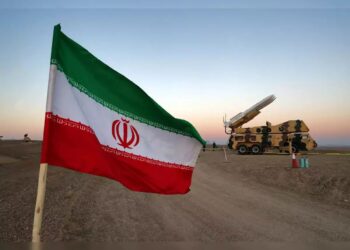


Despite their close relationship, Khamenei has previously criticized India for how it has handled Muslim concerns and the situation in Kashmir.
India has taken issue with remarks made by the supreme leader of Iran on how its Muslim minority is treated.
In a statement released on Monday, the Indian Ministry of External Affairs described as “misinformed and inappropriate” comments made by Ali Khamenei in a post on X. Despite their usually cordial relationship, India and Iran have occasionally disagreed about how the Hindu nationalist government of India treats minorities.
The New Delhi statement said, “Countries making comments about minorities are urged to look at their own record before making any observations on others.”
Khamenei said on social media on Monday, “We cannot consider ourselves to be Muslims if we are indifferent to the misery that a Muslim is facing in Myanmar, Gaza, India, or any other country,” and the brief letter was sent in response to that post.
Strong economic links are one indicator of the generally positive relationship between Iran and India. They agreed to build and run the port of Chabahar, which is located on Iran’s southeast coast, for ten years in May.
India is using the port to expand its exports to Iran, Afghanistan, and Central Asia, therefore avoiding Pakistan’s competing ports of Karachi and Gwadar.
However, Khamenei has already voiced criticism regarding matters concerning Muslims in India and the tumultuous region of Kashmir, which is predominantly Muslim.
Human rights organizations have said that since Prime Minister Narendra Modi assumed office in 2014, there has been a rise in the maltreatment of Muslims.
Since then, attacks on Muslims and their means of subsistence have increased throughout the nation. Hate speech reports have increased as well.
During Modi’s tenure in office, there have been more incidents of mob lynchings under the guise of defending cows, which some Hindus regard as sacred, and more homes and properties have been destroyed.
The controversial Citizenship Amendment Act, which grants non-Muslim refugees from nearby nations the right to become citizens of India, was put into effect by the Indian government in March.
It stated that until December 31, 2014, inhabitants of mostly Muslim Afghanistan, Bangladesh, and Pakistan who fled to Hindu-majority India as Christians, Parsis, Sikhs, Buddhists, Jains, and Hindus were eligible for citizenship.
Several rights groups branded the bill as “anti-Muslim” because it excluded the community, casting doubt on the secular nature of the biggest democracy in the world.
Critics also charge Iran with discriminating against minorities in the meantime.
Last month, a UN report claimed ethnic and religious minorities, in particular Kurd and Baluch minority, had been disproportionally harmed by Tehran’s repression since huge uprisings in 2022.