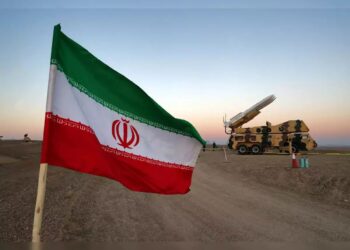


On Wednesday, Iran declared that it possesses the technology to develop a supersonic cruise missile, as reported by Iranian state media. This announcement is likely to raise concerns in Western countries about Tehran’s missile capabilities.
The revelation follows reports of the deployment of more than 3,000 U.S. sailors and Marines on two U.S. warships to the Red Sea, aimed at deterring Iran from interfering with merchant ships passing through the Strait of Hormuz in the Gulf.
According to the semi-official Tasnim news agency, the introduction of a supersonic cruise missile would mark a significant advancement in Iran’s defense program. The agency stated that intercepting a cruise missile traveling at supersonic speeds is extremely challenging. The missile is currently undergoing testing.
Despite opposition from the U.S. and Europe, Iran has expressed its intent to further develop its “defensive” missile program. However, some Western military analysts argue that Iran occasionally exaggerates its missile capabilities. Iran claims that its missiles have the range to target the bases of its adversaries, including Israel and the United States, in the Middle East.
Concerns over Iran’s ballistic missile capabilities played a role in former U.S. President Donald Trump’s decision in 2018 to withdraw from the 2015 nuclear agreement with Iran and reinstate sanctions. Efforts to revive the nuclear deal through indirect talks between Tehran and U.S. President Joe Biden’s administration have stalled since September of the previous year.
In recent years, there have been multiple attacks on ships in the Gulf, prompting the U.S. Navy to take action. Last month, it intervened to prevent Iran from seizing two commercial tankers in the Gulf of Oman. The Pentagon responded by deploying additional F-35 and F-16 fighter jets, along with a warship, to the Middle East. This move aims to monitor crucial waterways in the region following Iran’s previous seizures and harassment of commercial shipping vessels.