


The Greenland and Antarctic ice sheets are following the UN’s most pessimistic scenario situations for ocean level ascent. They hold enough solidified water to lift seas 65 meters. It is featuring defects in ebb and flow environmental change models.
Melting Ice Sheets Can Be Disastrous For Us
Mass misfortune from 2007 to 2017 because of liquefy water and disintegrating ice adjusted consummately with the Intergovernmental Panel for Climate Change’s (IPCC) most outrageous gauges. They see the two ice sheets signifying 40 centimeters (about 16 inches) to worldwide seas by 2100. They revealed it in Nature Climate Change. Such an expansion would have a staggering effect around the world. It would be expanding the ruinous intensity of tempest floods and uncovering waterfront areas home to countless individuals to rehashed and extreme flooding.
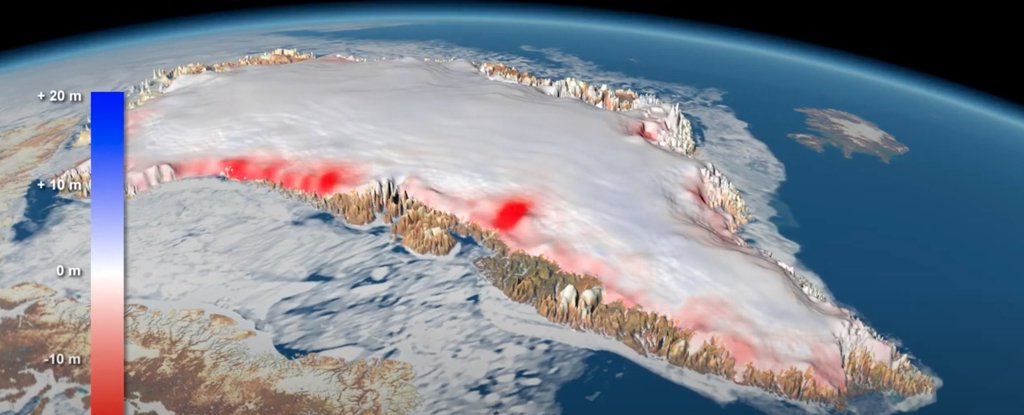 That is almost multiple times more than mid-go projections from the IPCC’s last significant Assessment Report in 2014. It predicted a 70-centimeter ascend in ocean level from all sources, including mountain icy masses and the development of sea water as it warms. Regardless of this away from between the watched truth of quickening ice sheet breaking down and the models following those patterns, an exceptional IPCC report a year ago on the planet’s solidified locales kept up similar finish of-century projections for Greenland. It took into consideration just a little increment from Antarctica under the most noteworthy ozone harming substance outflows situation.
All out ocean level ascent of at any rate a meter would probably require spending upward of $70 billion every year. It is in ocean dividers and different safeguards against flooding. A few elements clarify why the atmosphere models fundamental UN projections for ocean level may have given quick work to ice sheets.
Global Warming Needs To Be Addressed More Seriously
Ice sheet models do well in portraying the drawn out effect of slow an unnatural weather change. It has seen temperatures at the posts ascend unmistakably more rapidly than for the planet all in all. Yet, they have neglected to represent momentary variances in climate designs. They are, themselves, profoundly affected by environmental change. Until the turn of the 21st century, the West Antarctic and Greenland ice sheets commonly collected as much mass as they shed. Spillover, at the end of the day, was remunerated by new snowfall.
 Be that as it may, throughout the most recent twenty years prior, the social event pace of a worldwide temperature alteration has overturned this parity. A year ago, Greenland lost a record 532 billion tons of ice. It might be compared to six Olympic pools of chilly, new water streaming into the Atlantic consistently. This run-off represented 40 percent of ocean level ascent in 2019.
In another examination, Slater and associates determined that Earth’s ice masses. It was distributed recently in The Cryosphere, a diary of the European Geosciences Union. It is including mountain ice sheets, the Arctic ice top, and both ice sheets. They lost almost 28 trillion tons of mass somewhere in the range of 1994 and 2017. Not exactly 50% of that sum added to the ocean level ascent. The Arctic ice top, for instance, structures in the sea, and accordingly doesn’t build ocean level when it softens. The pace of ice misfortune, they found, has expanded about 60 percent of that timeframe.