


In October 1961, the Soviet Union dropped the most remarkable atomic bomb in history. It was let go over a far off island north of the Arctic Circle.
Atomic Bomb: A Real Monster
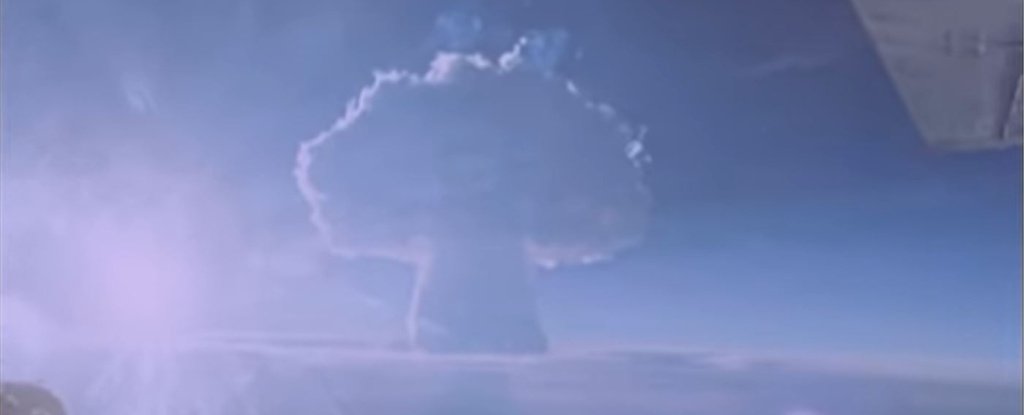
Despite the fact that the atomic bomb exploded almost 2.5 miles over the ground, the subsequent shockwave stripped the island as uncovered and level as a skating rink. Onlookers saw the glimmer in excess of 600 miles (965 km) away. They felt its inconceivable warmth inside 160 miles (250 km) of Ground Zero. The bomb’s immense mushroom cloud moved to simply underneath the edge of room.
It was the RDS-220 – otherwise called the Tsar Bomba. About 60 years after the bomb’s record-breaking explosion, no single unstable gadget has verged on coordinating its dangerous force. A week ago, Rosatom State Atomic Energy Corporation delivered 40 minutes of recently characterized film. It was indicating the bomb’s excursion from assembling to mushroom cloud. Presently, you can watch everything on YouTube. (The commencement to explosion starts at 22:20).
Soviet Premier Nikita Khrushchev actually charged the development of the Tsar Bomba in July 1961, Popular Mechanics revealed. While Krushchev needed a 100-megaton atomic weapon, designs at last gave him a 50-megaton variant. It was identical to 50 million tons (45 million metric huge amounts of) of TNT exploded on the double. Indeed, even with half of the head’s mentioned payload, the bomb was incredibly amazing. The bomb was a huge number of times more grounded than the nukes exploded by the United States over Hiroshima and Nagasaki during World War II. It even predominated the explosion of Castle Bravo — the most remarkable atomic weapon at any point tried by the United States. That yielded only 15 megatons (13 million metric tons).
Record Has Captured Every Detail
As the new film shows, the Tsar Bomba was tremendous, gauging 27 tons (24 metric tons). It was estimating about up to a two-fold decker transport. An aeronautical aircraft conveyed the monstrous weapon high over the Novaya Zemlya islands in the Russian Arctic. At that point they dropped it by means of parachute before clearing the territory. The blast was ground-breaking to the point that it really took the airplane out of the sky. It made the plane fall 3,000 feet (900 meters) before the pilot could right it, as per Popular Mechanics.
 Fortunately, no human losses have been credited to the Tsar Bomba explosion. No bomb coordinating its capacity was ever tried again. In 1963, the United States, the Union of Soviet Socialist Republics (USSR) and the United Kingdom marked the Limited Nuclear Test Ban Treaty, which precluded airborne atomic weapons tests. From that point forward, nuclear tests have continued underground as countries keep on amassing atomic weapons, at times changing the topography of the Earth around them.
One 2018 atomic test led in North Korea made a whole mountain breakdown over the test office — an update, maybe, that the world barely needs another Tsar Bomba so as to unleash obliterating atomic harm.