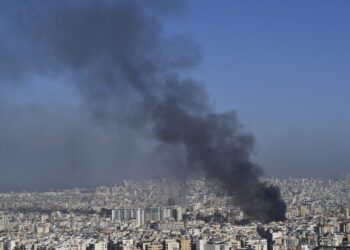


Syrian state news agency SANA has reported that Israel conducted air attacks near the capital city of Damascus, resulting in the injury of two Syrian soldiers. The airstrikes were launched at 12:25 am local time (21:25 GMT) from the Israeli-occupied Golan Heights.
Military sources cited by SANA confirmed that two Syrian soldiers were wounded in the attack, and there were also reports of some material losses. The Syrian Observatory for Human Rights, a UK-based war monitor with a wide network of sources in Syria, revealed that this airstrike marked the 20th time Israel has targeted locations in Syria in 2023. The strikes specifically targeted military positions near the airport in the town of Dimas, as well as the Beirut-Damascus highway west of the capital, which houses elite members of the Syrian army.
Syrian air defenses were able to intercept and shoot down a majority of the Israeli missiles, according to SANA.
The observatory further indicated that the missiles struck warehouses belonging to Hezbollah, a Lebanese armed group allied with the Syrian government, causing a fire. Israel has conducted numerous airstrikes on Syrian territory in recent years, often targeting areas controlled by the Syrian government. However, Israel rarely claims responsibility for these attacks.
In the past, Israel has targeted international airports in Damascus and the northern city of Aleppo, temporarily disabling their operations. While Israel does not frequently comment on its actions in Syria, it has consistently expressed its opposition to Iran’s expanding influence in the region and has made it clear that it will not allow Iran to strengthen its presence in Syrian territory.
The recent airstrike comes as the latest in a series of Israeli attacks on Syria. On July 2, the Syrian military reported an Israeli strike near the central city of Homs, resulting in material damage but no casualties. These strikes reflect Israel’s ongoing efforts to curb Iranian influence and prevent its arch-foe from gaining a stronger foothold in Syria.
The situation in the region remains tense as Israel continues its military actions while striving to maintain a balance that avoids a significant escalation of hostilities. The repercussions of these attacks and the ongoing power dynamics between Israel, Syria, and Iran will undoubtedly continue to shape the complex landscape of the Middle East.