

Despite their divergent approaches, the winner of Iran’s election will not be the sole decision-maker. Saeed Jalili and Masoud Pezeshkian, the two remaining candidates for the presidency of Iran, present distinct perspectives to voters regarding the country’s future. Nonetheless, specialists say their varying perspectives are probably not going to prompt a huge change in Iran’s international strategy. Pezeskhian, a former surgeon and health minister, won the election on Friday. However, he did not receive the necessary 50 percent to win, which forced him into a run-off with Jalili, who came in second, on July 5.
The purpose of the snap election on Friday was to select a successor to President Ebrahim Raisi, who passed away in a helicopter crash at the end of May. Pezeshkian hangs out in the race as the main non-moderate up-and-comer permitted to run. He had the support of reformists like previous Unfamiliar Clergyman Mohammad Javad Zarif, whose inclusion probably demonstrates Pezeshkian will seek after a key reformist international strategy objective: reworking an atomic arrangement to mitigate sanctions on Iran’s economy and straightforwardness strains with the West.
Under Hassan Rouhani’s centrist presidency, Iran and China, the European Union, France, Germany, Russia, the United Kingdom, and the United States agreed in 2015 to reduce its nuclear program in exchange for sanctions relief.
However, after three years, then-US President Donald Trump pulled out from the arrangement, smashing the expectations of the people who accepted it would have prepared for Iran’s financial renaissance. All things being equal, the US forced cruel new endorses, and Iranian hardliners tracked down new ground to say the West couldn’t be relied upon. The revival of the deal has largely stalled since then.
On the opposite side of the political spectrum, Jalili is viewed as the most inflexible delegate of moderate legislative issues. A triumph for this firm hardliner – fully backed by other moderate first-round up-and-comers – would check a considerably more fierce methodology towards the West, particularly the US, experts say. Having filled in as the boss of the atomic mediator between 2007-2012, Jalili went against the possibility that Iran ought to examine or think twice about different nations about its uranium enhancement program – a position he saved for the 2015 arrangement.
Not the only one who decides No matter what the up-and-comers’ particularly various positions, Iran’s leader works inside a restricted order. When it comes to foreign policy, the Islamic Revolutionary Guard Corps (IRGC) under Supreme Leader Ayatollah Ali Khamenei has the majority of the say.
“In the event that you get 180-degree change between a Trump or a [current US President Joe] Biden organization on the overall direction of the US, in Iran, with a difference in administration, you get a 45 percent distinction – it’s not immaterial however not quite so significant as in different nations,” said Ali Vaez, head of Global Emergency Gathering’s Iran program.
“There are aspects of continuity that restrict the amount of change that can be seen,” This has been suggested as one of the factors that contributed to the 41% turnout in Friday’s election, which was the lowest level in Iran’s history since the 1979 Islamic Revolution. Voters appear to have given up hope that a new president can improve many things. A reformist president would need to confront the traditionalist powers ruling Iran’s parliament, while his capacity to draw in with the West would be tried by the country’s local commitment, which has set it in opposition to partners of the West.
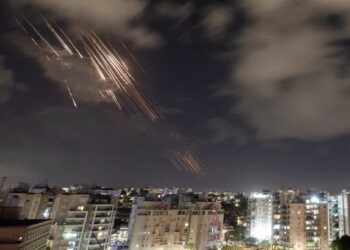
In April, Iran sent off a rocket and robot assault against Israel in reprisal for an Israeli attack on the Iranian consular structure in Damascus, Syria, which killed senior IRGC commandants.
The uncommon blow for blow came in the midst of uplifted provincial pressures as Israel’s conflict on Gaza delays and the capability of a hard and fast conflict among Israel and the Iran-moved Hezbollah in Lebanon increasingly poses a threat. However, nuclear negotiations with world powers are still on the table, despite the fact that the IRGC has long strictly controlled regional policies.
On this, the president can establish the vibe and mentality, regardless of whether it is just for negligible changes, said Vali Nasr, a teacher of Center East investigations at Johns Hopkins College. Nasr stated, “The president can be very important in exploring possibilities for different kinds of outcomes when it comes to the nuclear deal.”
“Pezeshkian would present a defense to begin converses with the US while Jalili wouldn’t.” Atomic discretion is vital to Iranians as it straightforwardly influences the nation’s economy – the top worry of most Iranians.
Progressive states have neglected to handle money devaluation and expansion, which they have accused on the Western approvals system. “For assents to be lifted, one should be keen on conversing with the West – whether you have… a die-hard president, it has an effect,” Nasr said. The hardline methodology A Jalili administration would be in accordance with the late Raisi’s methodology, who guaranteed in his three-year residency not to connect the economy to atomic discussions with unfamiliar powers.
All things being equal, the public authority chose to depend on Iran’s inward abilities, while turning its business towards the East, reinforcing attaches with China, Russia and adjoining nations. Under the supposed “obstruction economy”, Iran last year marked a China-expedited manage Saudi Arabia finishing a years-in length cold conflict between the territorial opponents. Raisi likewise pushed for Iran to join the Shanghai Participation Association and the nation turned into an individual from the BRICS coalition recently.
Be that as it may, the supposed go toward the East didn’t create substantial outcomes concerning working on the economy – something the moderate camp has recognized – leaving any future president needing finding some kind of harmony with regards to heading.
According to Hamid Reza Gholamzadeh, the director of DiploHouse, a think tank that focuses on foreign policy, “Jalili won’t be able to completely avoid talks with the West, as Pezeshkian won’t focus only on nuclear talks.” He added that Iran’s international strategy will likewise rely upon outside factors – above all, the US political race in November.
“The test isn’t from inside Iran yet from outside – on whether Trump or Biden wins,” he said. “Regardless of whether Pezeskhian is the president, he will confront unfamiliar difficulties, instead of homegrown.”