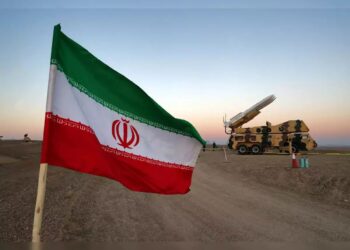


With a whirlwind of hacks and phony sites, Iran has heightened its endeavors to dishonor American majority rule government and conceivably tip the race against previous President Donald Trump.
“Your trusted source for conservative news and perspectives in the vibrant city of Savannah,” says a website called Savannah Time. NioThinker, a different website, aspires to become “your go-to destination for insightful, progressive news.”
The web-based outlet Westland Sun seems to take care of Muslims in rural Detroit. None are what they seem, by all accounts, to be. All things being equal, they are important for what American authorities and tech organization experts say is a heightening effort by Iran to influence the current year’s American official political decision. Iran has long done covert data tasks against its foes, particularly Israel, Saudi Arabia and the US, yet up to this point a large portion of its exercises were directed under the shadow of comparable missions by Russia and China.
Its most recent promulgation and disinformation endeavors have developed more bold, more differed and more aggressive, as indicated by the U.S. government, organization authorities and Iran specialists.
Iran’s endeavors seem expected to sabotage previous President Donald J. Officials and businesses say that Trump’s campaign to get back in the White House has also targeted President Biden and Vice President Kamala Harris, which suggests that the bigger goal is to cause internal strife and make the democratic system in the United States look bad to the rest of the world. “Iran is turning out to be progressively forceful in their unfamiliar impact endeavors, looking to stir up friction and subvert trust in our majority rule organizations,” Avril Haines, the head of public knowledge, cautioned as of late.
Ms. “As they engage online with accounts and actors they do not personally know,” Haines advised Americans to be cautious. “Iran perceives this year’s elections to be particularly consequential in terms of the impact they could have on its national security interests, increasing Tehran’s inclination to try to shape the outcome,” according to a statement released by her office last month alongside the Federal Bureau of Investigation and the Cybersecurity and Infrastructure Security Agency.
The Iranian mission to the United Nations declined to comment on American-targeted disinformation websites and campaigns. In a prior explanation gave on Aug. 19, addressing endeavors to hack Mr. Trump’s mission, the mission said that the claims “are unverified and absent any and all any standing” and that Iran “harbors neither the aim nor the intention to impede the U.S. official political race.”
Iran’s tremendous organization of impact agents and programmers incorporates front organizations constrained by the Progressive Watchmen Corps, as per one Iranian authority and another Iranian who works in the state’s media and data area, both of whom are know all about the country’s disinformation crusades. Because they were not permitted to speak publicly, both individuals requested that their names not be made public. The Revolutionary Guards Corps is a powerful elite group that is firmly established in every sphere of the country, including politics, the economy, and online space.
The public authority and the Watchmen likewise work an organization of people who utilize virtual entertainment stages to push Iran’s perspectives, a few under expected names.
According to the officials, they also order projects from Iranian start-ups and tech companies, some of which are unaware of the projects’ true goals. The two Iranians, one of whom is a Guardsman, claimed that the Iranian government had increased the already substantial resources it had invested in its information operations since 2022, when the nation was rocked by women-led protests.
Government specialists, they said, regularly scout Iranian colleges to enroll top tech graduates, offering significant compensations, research subsidizing and office space. According to Amir Rashidi, director of digital rights and security at Miaan Group, a Middle Eastern-focused human rights organization, “Iran’s strategy in the field of information and propaganda is similar to how the Revolutionary Guards manage the proxy militias across the Middle East.”
“They play the long game and infiltrate slowly but forcefully.” Currently this year, Iranian agents have prevailed with regards to hacking the messages of Roger Stone, a long-lasting counselor to Mr. Trump, and endeavored to enter the mission of Mr. Biden and Ms. Harris, with ambiguous outcomes. Meta unveiled last month that it had identified a comparable exertion against both political missions on WhatsApp, the informing application. Iran’s attention on the US honed as Israel, an American partner, attacked Gaza after the Hamas assault on Oct. 7.
Israel and Hezbollah have also engaged in firefights in Lebanon since then. Both movements are a part of a Middle Eastern militia network supported by Iran. Iran has denied association in the fights, however the country’s preeminent chief, Ayatollah Ali Khamenei, rooted for them in an open letter. Disinformation and propaganda have been an integral part of the Islamic Republic’s identity ever since it was established in 1979.
Iran’s strategies and goals changed along with technology, with Mr. Khamenei in 2011 depicting the internet as the new wilderness for Iran’s data “jihad,” or war. According to Microsoft and OpenAI, which discovered the use of its artificial intelligence tools in the efforts, at least five deceptive websites have emerged to feed American voters a steady diet of content intended to undermine support for Israel and trust in U.S. democracy more generally. The majority of Iran’s information efforts have focused on Mr. Trump.
One article referred to the former president as an “opioid-pilled elephant in the MAGA china shop” and a “raving mad litigiosaur” on NioThinker, a liberal website that Microsoft linked to Iran’s activities. The Iranian missions, however, have likewise designated leftists.
A new title on Savannah Time, which has no undeniable association with the city in Georgia, cautioned that Ms. “A dangerous flirtation with Communist-style price controls,” according to Harris. Its substance frequently repeats moderate media sources in the US, jumping on approaches supporting L.G.B.T.Q. or then again other orientation issues.Iran has likewise denounced both the US and Israel of doing disinformation crusades pointed toward undermining the country. It has been the target of cyberattacks from both of those nations, which have also targeted its nationwide fuel distribution system and a military ship. Iran’s efforts to exert influence recall those of Russia, which in 2016 used social media to exert influence and hack the campaign of Hillary Rodham Clinton. Iran used American voter registration data to send Democratic voters intimidating emails in the 2020 presidential election.
A portion of the messages claimed to be from the Pleased Young men, an extreme right radical gathering, while others contained connections to a misleading video that endeavored to fan questions about remote democratic. According to a declassified intelligence assessment from 2021, Iran attempted to undermine Mr. Trump’s chances of winning the election and the democratic process, with the larger goal of hurting how the United States is perceived in the Middle East.
Yet again during the midterm races in 2022, Iran endeavored to meddle, expecting to “exploit apparent social divisions,” as per one more declassified knowledge report.
Specialists found proof that Iranian authorities needed to reinforce patriot gatherings and utilize virtual entertainment to set fanatics in opposition to one another in 2024. According to the intelligence assessment, Iran also considered strategies like setting up fake news agencies to interact with American media outlets and deploying “troll teams” on social media. In October 2022, the assessment found three Iran-based influence networks on Twitter, the platform that was later renamed X.
They were made up to a great extent of records claiming to be left-inclining Americans who embraced supportive of Palestinian opinions and endeavored to raise assets for American competitors and underwrite nearby lawmakers, for the most part moderate ones. John Hultquist, the chief analyst at Google’s Mandiant Intelligence, commented on Iran’s information operations, “They can be quite creative.”
The majority of Tehran’s covert influence operations are carried out by Guards units. The US government has distinguished something like three front organizations it says are constrained by the Watchmen: Global Association of Virtual Media, the Iranian Islamic Radio and TV Association, and Bayan Rasaneh Gostar Foundation.
An assistance needed promotion for Bayan Gostar doesn’t depict what sort of work the organization performs, however it says representatives can work from a distance and get an administration pay and advantages. Candidates must be “young and ambitious” and “familiar with social media platforms and cyberspace.” Before the 2020 election, the Department of Treasury imposed sanctions on all three businesses. It explicitly blamed Bayan Gostar for “taking advantage of social issues inside the US, including the Coronavirus pandemic, and stigmatizing U.S. political figures.”
Presently, with the following American political decision only weeks away, Iran seems fearless. Bret Schafer, a senior fellow with the Alliance for Securing Democracy of the German Marshall Fund, stated, “They clearly are not concerned about blowback.” “The gamble resistance is very high and that makes them a worry, since, supposing that they’re not stressed over getting found out or naming and disgracing, that permits them to simply attempt a lot of stuff and be really forceful.”