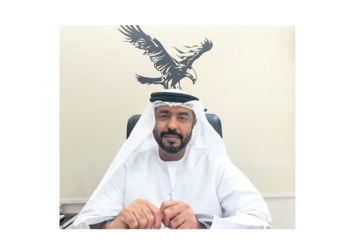


Sapeon, a South Korean man-made consciousness chip startup settled in California, is raising a financing round that places its valuation above $400 million, its Chief informed CNBC.
The startup is supported by huge South Korean firms SK Telecom, memory-chip producer SK Hynix and SK Square, a venture organization veered off of SK Telecom.
Sapeon plans man-made reasoning semiconductors for server farms, for instance those run by distributed computing firms. These simulated intelligence chips are expected for simulated intelligence applications that require colossal measures of information handling.
“Artificial intelligence arrangements will grow a great deal because of the development of man-made intelligence administrations like ChatGPT,” Soojung Ryu, President of Sapeon, told CNBC in a meeting at the Versatile World Congress that broadcasted Wednesday.
ChatGPT is the viral chatbot created by OpenAI. It has created a ruckus in the tech world, with goliaths from Google to Chinese firm Baidu scrambling to deliver their own opponents. Innovation leaders say ChatGPT has placed artificial intelligence applications on the guide.
Examiners at Bernstein anticipate that ChatGPT should be an extravagant shelter for chipmakers hoping to fuel these man-made intelligence models.
“We would like form this sort of framework (simulated intelligence chips) to have a chance for the business,” Ryu said.
Sapeon was made in 2016 inside SK Telecom, one of South Korea’s greatest broadcast communications firms. SK Telecom then, at that point, turned out the firm last year and raised external venture.
Ryu said the organization is as of now fund-raising at a valuation of $400 million.
South Korean semiconductor firms including Samsung and SK Hynix have commonly major areas of strength for been memory chips that go into gadgets like computers. Sapeon is among one of the primary firms out of South Korea to attempt to break the simulated intelligence chip market.
Ryu said that Sapeon is focusing on the U.S. market which would set it in opposition to Nvidia. When inquired as to whether Sapeon can challenge Nvidia, Ryu replied “yes.”
Presently, Sapeon has one chip available called the X220. It is based on purported 28-nanometer innovation. The nanometer figure alludes to the size of every individual semiconductor on a chip. The more modest the semiconductor, the a greater amount of them can be pressed onto a solitary semiconductor. Normally, a decrease in nanometer size can yield all the more remarkable and proficient chips.
Ryu said the organization will send off a 7-nanometer man-made intelligence chip this year and it will be fabricated by TSMC, the world’s greatest agreement chipmaker. That would carry it nearer to the ongoing innovation available.